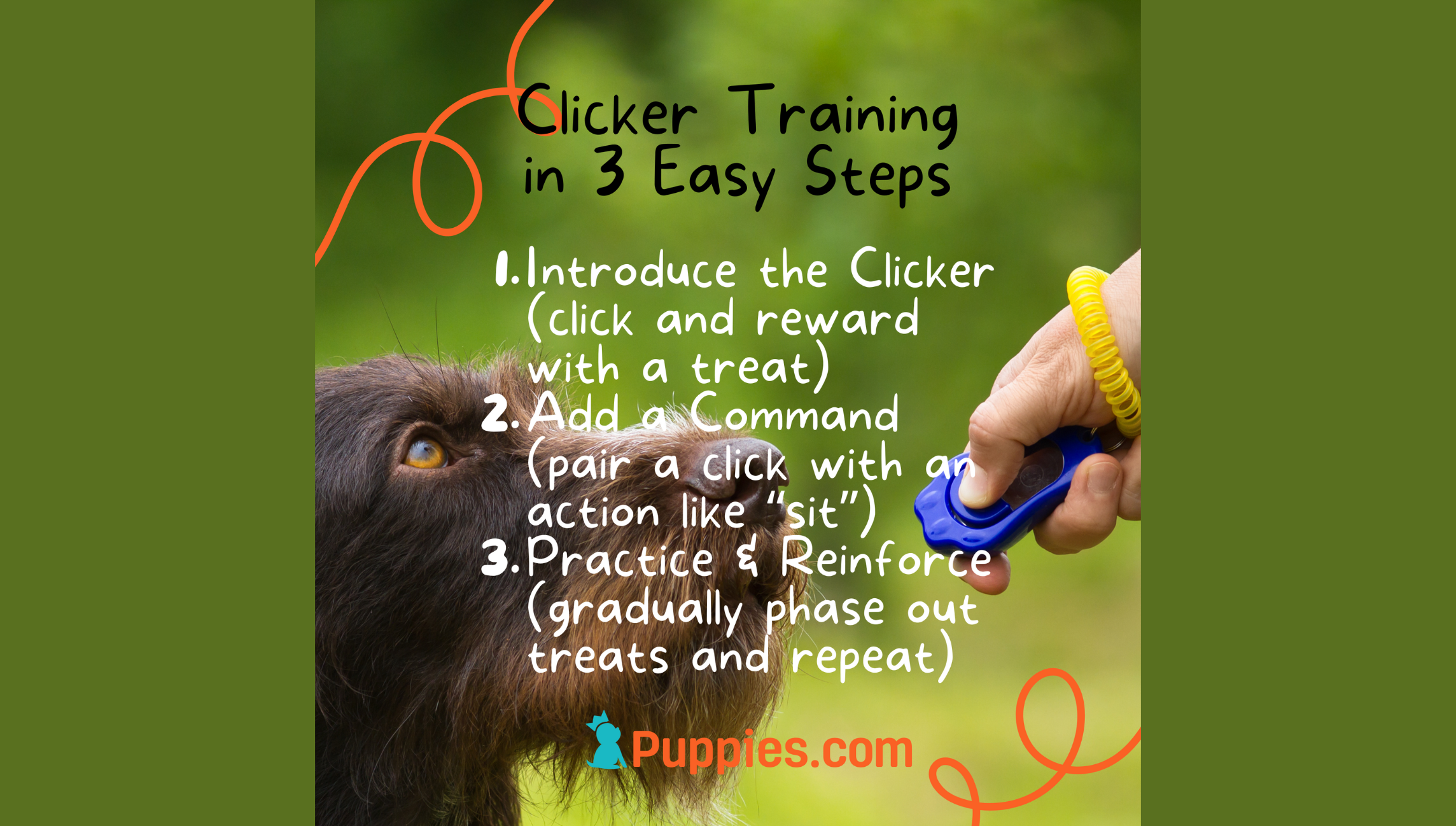
The Mechanics of Clicker Training
A clicker is a small handheld device that makes a distinct “click” sound when pressed. The sound is a marker signal to let your puppy know they’ve done something correctly. Before using the clicker for training, you must associate the click sound with a reward (usually a treat). This is known as charging the clicker.Example: Click the device and immediately give your puppy a treat. Repeat this several times until your puppy connects the click sound with receiving a reward.
Marking the Behavior:
During training, you use the clicker to “mark” the exact moment your puppy performs the desired behavior, such as sitting, lying down, or responding to their name.Example: If teaching “sit,” click the moment your puppy’s bottom touches the ground, then give them a treat.
Reinforcing the Behavior:
Over time, your puppy learns that performing the behavior results in the click (and treat), encouraging them to repeat it.Why It Works:
The clicker provides a clear, consistent, and immediate signal that is more precise than verbal praise. Puppies understand it as a distinct marker for correct behavior. It bridges the gap between the desired action and the reward, making learning faster. Advantages of Clicker Training: – Precision: Marks the exact moment of correct behavior. – Consistency: The sound of the clicker is the same every time, unlike voice tones that may vary. – Positive Reinforcement: Encourages learning through rewards rather than punishment, building trust and confidence in your puppy.Questions And Answers:
Q: At What Age Should You Introduce Clicker Training?
A: You can introduce clicker training to your puppy as early as 8 weeks old, as long as they are comfortable and adjusting to their environment. Puppies are highly impressionable during their early weeks, making it an ideal time to start basic training. Benefits of starting clicker training early with your puppy: – Puppies are naturally curious and eager to learn during their first few months. – Early training helps establish good habits and prevent unwanted behaviors. – The positive reinforcement method used in clicker training builds trust and confidence in your puppy.Q: Do You Need Obedience School for Clicker Training?
A: You don’t need to attend obedience school to use a clicker to train successfully. Many owners train their puppies at home with excellent results. However, obedience school can still offer benefits, depending on your situation. For example, professional guidance ensures correct techniques. Additionally, your puppy will have socialization opportunities with other dogs. Also, a structured environment is desirable for addressing specific behavior challenges. When to consider obedience school for clicker training: – If you’re new to dog training and want extra support. – If your puppy shows behavioral issues like excessive barking, biting, or fearfulness. – If your puppy needs more controlled exposure to other dogs and people.Q: Can I Conduct Clicker Training at Home?
A: Yes, you conduct clicker training at home. Benefits are that it is a cost effective option for many pet owners. Clickers can be purchased at Pet Shops for under $10, and often come in packs of two. Clicker training at home builds a direct bond between you and your puppy. You can settle into a routine and train your puppy at your own pace. Here are some tips on how to get started with clicker training at home: – Research or watch tutorials on clicker training techniques.\ – Be consistent and patient. – Set achievable goals for each session. You can start clicker training at home and then later enroll your puppy in obedience school to take advantage of advanced training and socialization.What Not To Do With Clicker Training
Avoid these common mistakes when clicker training your dog. Clicker training can work wonders for teaching your dog new behaviors, but it’s easy to slip up if you’re new to the method. To ensure success and keep your training sessions positive, here are the top things you shouldn’t do when clicker training your pup. Here are some common mistakes to avoid when using clicker training for your dog:- Using the Clicker as a Remote Control: The clicker is not a command device. It’s a tool to mark the exact moment your dog does something right. Avoid pointing it at your dog or treating it like a cue.
- Clicking Without Rewarding: Always pair the click with a treat or other reward, especially during the early stages. If you click without rewarding, your dog may stop associating the sound with positive reinforcement.
- Clicking Too Late: Timing is everything! If you click after the desired behavior, your dog might not understand what they’re being rewarded for.
- Using the Clicker as Punishment: The clicker should always signify something positive. Never use it to startle or discourage unwanted behavior.
- Overusing the Clicker: Once your dog reliably performs a behavior, phase out the clicker and rely on verbal cues or praise instead.
- Skipping Practice Sessions: Consistency is key. Sporadic training or skipping sessions can confuse your dog and slow progress.
- Expecting Instant Results: Dogs learn at their own pace. Be patient, and don’t rush the process.
- Ignoring Your Dog’s Comfort: If your dog seems stressed or overwhelmed, take a break. Training should be a fun and positive experience for both of you.
Key Takeaway Tips For Success With Clicker Training:
- Keep training sessions short and fun, about 5–10 minutes.
- Always follow the click with a reward, especially in the early stages.
- Gradually phase out the clicker as your puppy masters the behavior, using verbal praise or treats alone.
- Avoid clicking for no reason, as this can confuse your puppy.
- Clicker training is an excellent method for teaching puppies basic commands, tricks, and good manners, all while strengthening your bond.
Disclaimer: The information provided on this blog is for informational purposes only and should not be considered professional training, behavioral, or nutritional advice. Every dog is unique, and training methods, dietary needs, and health considerations may vary. For guidance tailored to your specific situation, please consult a professional dog trainer, veterinarian, or canine nutritionist.