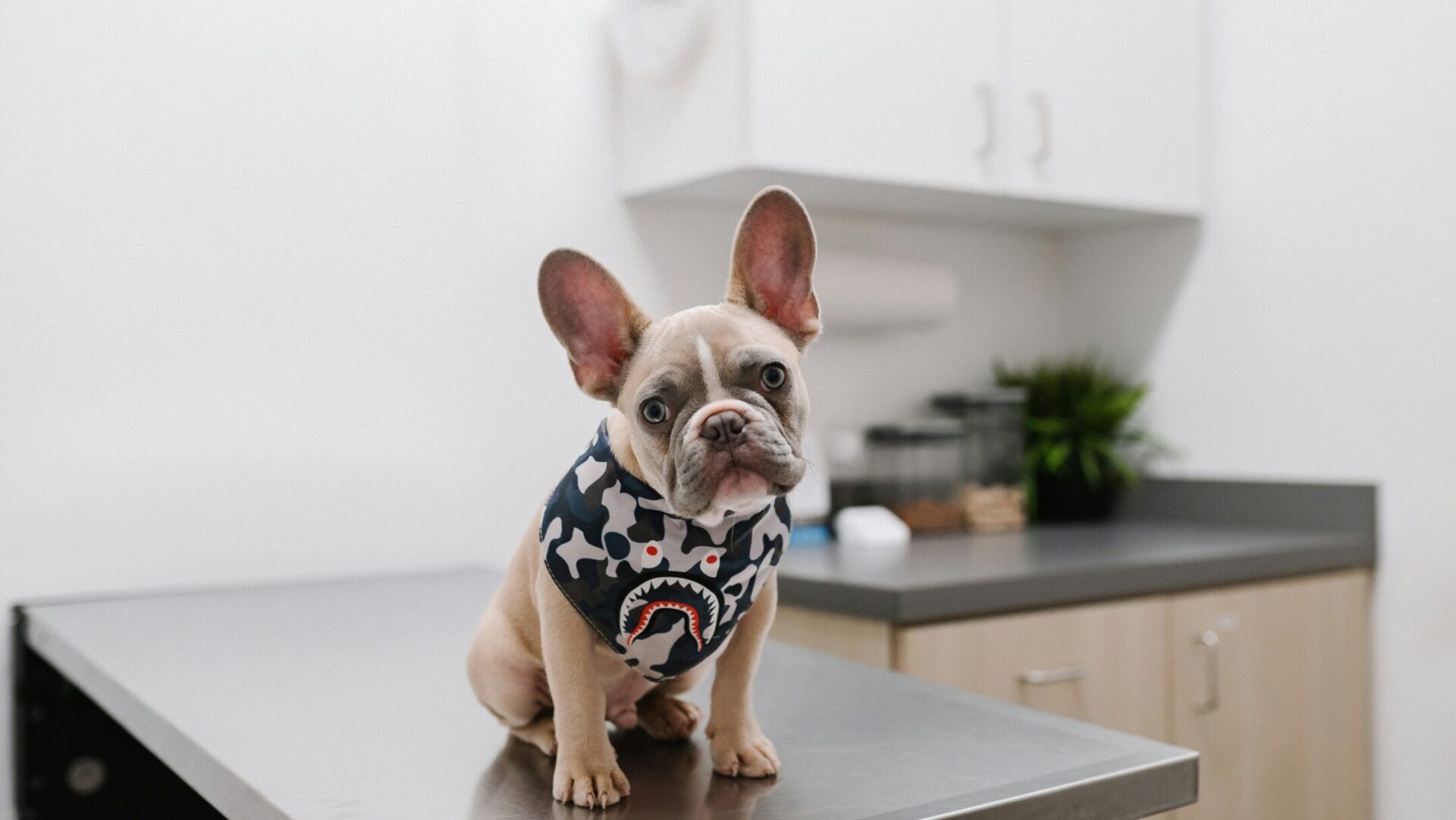
Bringing home a new puppy is so exciting. We know this firsthand—we bring our new girl home in just a few weeks, and we are overjoyed and so excited to meet her. Like many future puppy parents, we’ve been busy researching supplies, prepping the house, and imagining life with a puppy underfoot when we realized we’d forgotten something very basic: setting up veterinary care. Finding a good veterinarian for your new puppy is an important first step in puppy parenting.
Most good breeders will send puppies home with their first round of vaccinations (typically Distemper, Adenovirus, Parvo, and Parainfluenza—often referred to as DHPP) and routine deworming. However, your puppy will need their next round of vaccinations almost as soon as they come home to you. Unfortunately, veterinary clinics across the country are overwhelmed right now and are often booking appointments weeks or even months in advance. In other words, you may need to choose a veterinarian and schedule your puppy’s first appointment before your puppy even comes home.
So how do you choose the right veterinary clinic? Below are some key factors to help you think through that decision.
Fear Free or Low-Stress Veterinary Care
In my opinion, the comfort, welfare, and behavioral needs of both you and your puppy are critical—especially early on. Those first veterinary visits can set your puppy up for a lifetime of calm, cooperative vet care…or for years of stress and struggle. If a puppy’s early vet visits are gentle and positive, they’re much more likely to walk into the clinic willingly as an adult. If those visits are frightening, painful, or overwhelming, you may later find yourself struggling just to get your dog through the front door. That’s stressful for everyone involved.
One way to stack the behavioral deck in your favor is to look for a veterinary clinic that genuinely follows Fear Free or low-stress handling principles. These clinics are often designed to reduce stress in the waiting area, use handling techniques that minimize fear and discomfort, and have medications available to help animals who are emotionally struggling. Staff are trained to pay attention not just to physical health, but also to how an animal is coping during the visit. You can find Fear Free certified clinics here and Low Stress Handling® certified clinics here.
Good low-stress clinics will also:
- Help you prepare your puppy ahead of time
- Take notes on how each visit goes emotionally
- Adjust future procedures based on your puppy’s previous experiences
From a behavioral perspective, this is the gold standard. That said, not every clinic that says they are Fear Free or low-stress actually practices it consistently. The first time you visit a new clinic, be prepared to advocate strongly for your puppy—and be willing to leave if you’re not being heard. I once took my newly adopted greyhound to a clinic that advertised itself as low-stress. Despite this, the staff tried to physically force him into a sit (greyhounds often struggle to sit comfortably due to their body structure) so they could give vaccines, even though he was clearly terrified. We left immediately and never went back.
Special Clinics for Special Medical Needs
If your puppy belongs to a breed—or is an individual—with particular medical needs, that may influence which clinic is the best fit. For example, Brachycephalic dogs (such as French Bulldogs, English Bulldogs, and Pugs) often require veterinarians who are especially knowledgeable about airway and anesthesia risks.
Greyhounds are another good example. They have unique medical characteristics, including specialized anesthesia needs, naturally higher red blood cell counts, and lab values that can look “abnormal” on standard bloodwork despite being normal for the breed. A general practitioner may be perfectly adequate for a Greyhound—but lack of breed-specific knowledge can increase the risk of surgical complications or misinterpretation of test results.
Below is a general guide to common medical risks and the types of breeds most often affected. This isn’t meant to diagnose your puppy—just to help you think about whether breed-specific experience might matter when choosing a veterinarian.
| Medical Concern / Risk | Breed Types Commonly Affected | Example Breeds |
| Brachycephalic Airway Syndrome (BAS) | Short-nosed (Brachycephalic) breeds | Bulldogs (English/French), Pugs, Boston Terriers, Boxers |
| Orthopedic disorders | Large & giant breeds | German shepherds, Great Danes, Mastiffs, Rottweilers, Labradors |
| Intervertebral Disc Disease (IVDD) | Long-backed, short-legged breeds | Dachshunds, Corgis, Basset Hounds |
| Cardiac disease | Certain medium–large breeds | Cavalier King Charles spaniels, Dobermans, Boxers |
| Skin & allergy disorders | Breeds with skin folds or allergy predisposition | Shar Pei, bulldogs, West Highland White Terriers |
| Ocular (eye) disorders | Prominent-eye or genetically predisposed breeds | Shih Tzu, Pekingese, Cocker Spaniels, Collies |
| Neurologic disorders (including seizures) | Genetically predisposed breeds | Border collies, Australian Shepherds, Beagles |
| Endocrine disorders | Breeds prone to hormone conditions | Poodles, Golden Retrievers, Schnauzers |
| Autoimmune disorders | Certain purebred lines | Akitas, German Shepherds, Standard Poodles |
| Heat intolerance | Thick-coated or Brachycephalic breeds | Huskies, Malamutes, Bulldogs |
| Anesthesia sensitivity | Sight hounds | Greyhounds, Whippets, Salukis |
| Bleeding disorders | Specific genetic lines | Dobermans, Scottish Terriers |
Insurance Requirements
Many people choose to purchase medical insurance for their new puppy, depending on finances and personal risk tolerance. Some plans cover emergencies only, while others include routine and preventive care. If you plan to use insurance, it’s worth checking that your prospective veterinary clinic is familiar with the reimbursement process for your provider. Most clinics do not bill insurance directly, but some are much more comfortable helping clients navigate paperwork and documentation. The same consideration applies to emergency and urgent care clinics—those relationships matter most when you’re stressed and short on time.
Veterinary Clinic Wait Lists and Appointment Availability
Another unfortunate but important factor is how quickly a clinic can see you when something goes wrong. Many clinics are booking routine appointments weeks in advance, which is manageable for annual visits but problematic for urgent concerns. If your regular vet can’t fit you in quickly, you may end up at urgent care or an emergency clinic—often with higher costs and a provider who doesn’t know your dog. When calling prospective clinics, ask how they typically handle urgent appointments for established clients. A clinic that can reliably fit you in within a day or two can save you a lot of stress (and money) down the road.
Pricing and Transparency
Veterinarians are not getting rich—but pricing still matters. Costs can vary widely between clinics, and it’s reasonable to choose one whose fees align with your budget. Higher prices do not automatically mean better care, and lower prices don’t always mean poor care.
That said, be cautious with clinics that are dramatically underpriced, especially for surgical procedures. Surgery requires anesthesia, which always carries some level of risk. That risk is reduced when vital signs are continuously monitored by trained staff—and more staff means higher costs.
For example, there is a veterinarian in my state who offers extremely inexpensive dental cleanings. The reason they are so cheap is that the procedure is done with no additional personnel present—the veterinarian is both performing the dental and monitoring anesthesia at the same time, which does not meet a typical standard of care. For me, that level of risk isn’t acceptable, and I would rather pay more for dedicated monitoring. Your own risk tolerance and budget may be different, but it’s important to understand why a clinic’s pricing looks the way it does.
Don’t Forget Emergency Care
You don’t need to be an established client to visit an emergency veterinary clinic—but you do want to know where you’ll go ahead of time. Emergencies have a way of happening at 10:00 p.m. on a holiday weekend, when your regular vet is closed. Take some time now to identify your local emergency and urgent care clinics. Put their addresses into your phone and Google Maps so you’re not scrambling when something stressful happens.
Conclusion
Finding the right veterinary clinic for your new puppy takes a bit of planning and a few phone calls, but it’s well worth the effort. You’re not locked into the first clinic you try—finding a good fit is allowed to be a process. The goal is to build a veterinary relationship that supports your puppy’s physical health and emotional wellbeing for years to come.
P.S. If you want a general list of questions to ask prospective veterinary clinics, we’ve created one for you, below!
Questions to Ask a Prospective Veterinarian
(Tip: You can copy or screenshot this when calling clinics)
Clinic philosophy & handling
- Do you use Fear Free or low-stress handling techniques? (the answer should be yes!)
- How do you support puppies who are nervous or fearful?
- Can owners be present during exams and procedures? (the answer should be yes!)
Scheduling & access
- How far out are routine appointments booking?
- How quickly can established clients be seen for urgent concerns?
- Do you offer same-day or drop-off appointments?
Medical experience
- Do you regularly work with my puppy’s breed or size?
- Are you comfortable managing breed-specific medical needs? If yes, how so?
- Who do you refer to for specialists if needed? If yes, what kinds do you typically refer to?
Pricing & transparency
- Can you give general estimates for common puppy care (vaccines, spay/neuter, emergencies)?
- How do you handle anesthesia monitoring during procedures? How many staff are present? How do you monitor the period when the animal is recovering from anesthesia?
Insurance & emergencies
- Does your practice accept health insurance? Does your practice accept pet insurance? Most veterinary practices accept pet insurance — but it’s worth asking upfront so you know what to expect. Keep in mind that pet insurance typically works on a reimbursement model, meaning you pay your vet visit costs directly and then file a claim with your provider. So rather than swiping an insurance card at the desk, you’re covered on the back end.
- Which emergency clinic do you recommend after hours?
At Puppies.com, we believe finding the right healthcare team for your new puppy is important.By understanding what to look for in a Veterinarian before you bring your new puppy home, you’re setting yourself (and your new best friend) up for a lifetime of joy, health, and tail-wagging happiness.