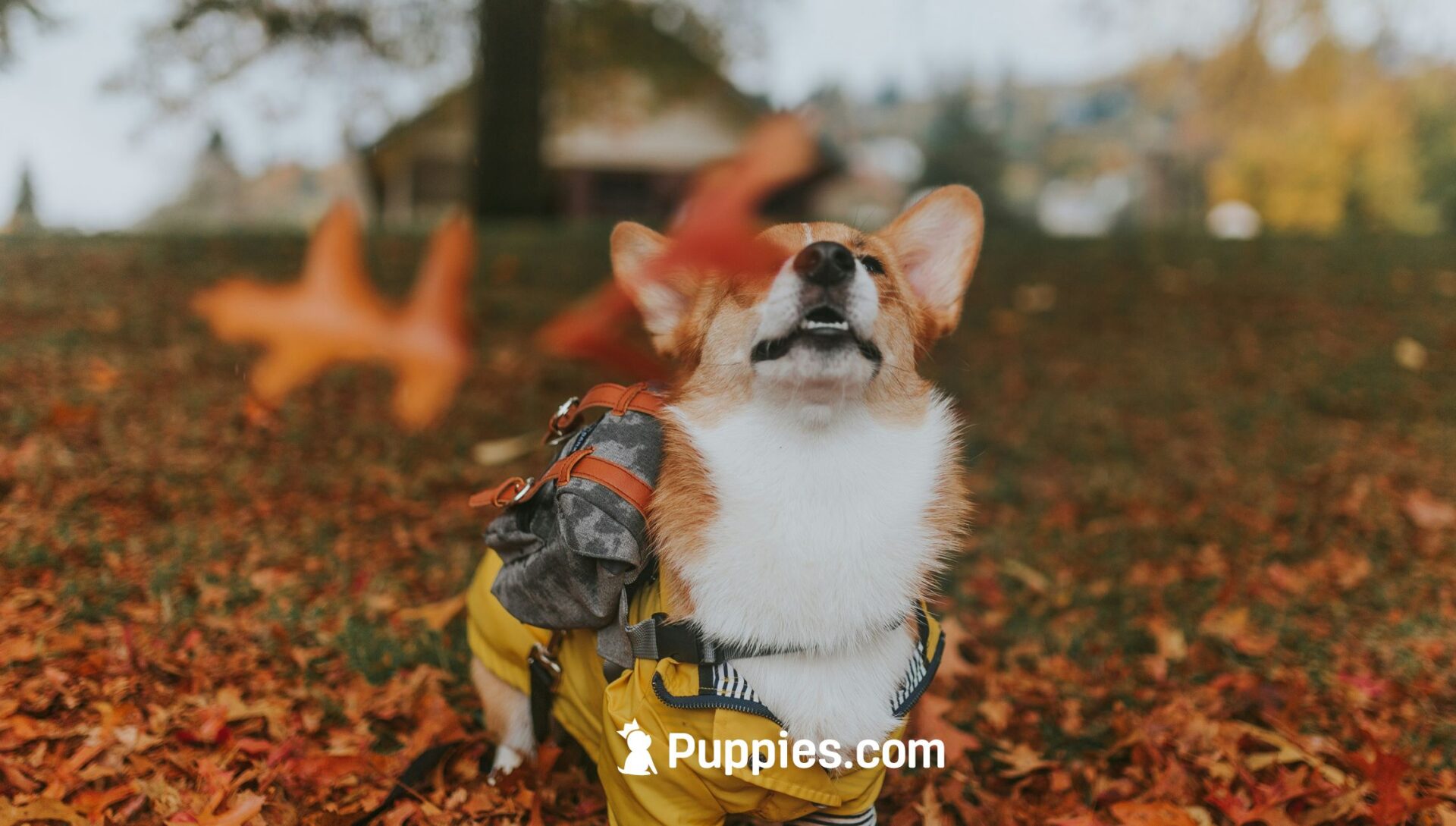
Fall is a beautiful time to bond with your dog, but it’s important to stay aware of seasonal changes and hazards. By taking a few extra precautions, you and your dog can safely enjoy all the crisp, cool adventures fall offers!
At Puppies.com, we are your trusted source for everything puppy and dog-related. Whether it’s expert advice, practical tips, or thoughtful guidance, we’re here to ensure you and your pup have the best experience year-round. Let us help you make the most of this season with insights to keep your dog safe, happy, and healthy.
As the temperatures cool down and the leaves change, fall brings exciting opportunities for outdoor activities with your dog. However, the season also introduces new challenges and potential hazards for our furry friends. Whether enjoying a brisk walk or staying cozy at home, here are some essential fall safety tips to ensure your dog stays safe and comfortable.
1. Watch Out for Wildlife Encounters
Fall is a time when wildlife like squirrels, skunks, and raccoons are more active as they prepare for winter. Keep your dog on a leash to avoid unexpected encounters. Not only can wild animals pose a physical threat, but they can also carry diseases or parasites that could harm your dog.
Tip: Check your dog for ticks after walks, as tick season can extend into fall in many areas.
2. Be Cautious of Seasonal Decorations
Pumpkins, corn stalks, and gourds may look festive but can pose a choking hazard if your dog chews on them. Candles and electric lights can also be dangerous, especially if a curious pup knocks them over. Make sure to dog-proof your decorations or keep them out of reach.
Tip: Keep a barrier between your dog and your seasonal decorations when you are away.
3. Rethink Cold Weather Gear
As the weather starts to cool down, it’s important to ensure your dog is comfortable and warm during walks. Short-haired and smaller dogs might benefit from a sweater or jacket. If your dog is sensitive to the cold, consider investing in proper gear to keep it warm and dry. There are so many colorful options available through Chewy to help keep your pup warm and dry this fall and winter season. This cute plaid jacket is extra sporty!
Tip: Avoid leaving your dog outside for long periods once temperatures drop.
4. Avoid Toxic Plants and Mushrooms
Certain plants and mushrooms thrive in the fall; some can be toxic to dogs if ingested. Fallen leaves may hide mushrooms in your yard or local parks, so keep an eye on your pup to prevent accidental snacking. Berries and nuts can also be toxic to your dog.
Acorns contain tannins, which can be toxic to dogs and cause stomach upset, vomiting, and diarrhea. In severe cases, if a dog consumes a large number of acorns, it could lead to more serious issues like kidney damage or intestinal blockages.
If you think your dog has eaten acorns, it’s a good idea to monitor for symptoms like vomiting, loss of appetite, lethargy, or signs of discomfort. If these symptoms appear, contacting your veterinarian is recommended. It’s best to avoid areas where acorns are plentiful or to keep an eye on your dog during walks to prevent them from ingesting any.
Tip: Learn which mushrooms and plants in your area are toxic to dogs, and keep your yard free of any potential dangers. While on walks, ensure your dog’s curiosity doesn’t lead to ingesting unknown plants, berries, and nuts.
5. Keep an Eye on Allergies
Fall allergens, such as mold, ragweed, and dust, can trigger allergic reactions in dogs. If you notice your dog scratching more than usual, sneezing, or showing signs of skin irritation, it might be time for a vet visit to check for seasonal allergies. Some medicated shampoos are specially formulated for dogs and may offer soothing, conditioning year-round.
Tip: Regular baths and cleaning your dog’s bedding can help reduce allergens.
6. Watch for Joint Pain in Older Dogs
The colder weather can exacerbate arthritis or joint pain in senior dogs. Pay attention to signs like stiffness, limping, or reluctance to move around.
Tip: As the weather cools, you may consider supplements or medications to help ease your dog’s discomfort. If your floors are slippery, you may want to add anti-slip rugs to help keep your dog comfortable.
7. Be Visible on Walks
With the days growing shorter, you might find yourself walking your dog in the dark more often. Make sure you and your dog both are visible to cars and other pedestrians by using reflective gear or LED collars and leashes. We like this LED no pull harness vest from Chewy.
At Puppies.com we understand that fall is a beautiful time to bond with your dog, but it’s important to stay aware of seasonal changes and hazards. By taking a few extra precautions, you and your dog can safely enjoy all the crisp, cool adventures fall has to offer!