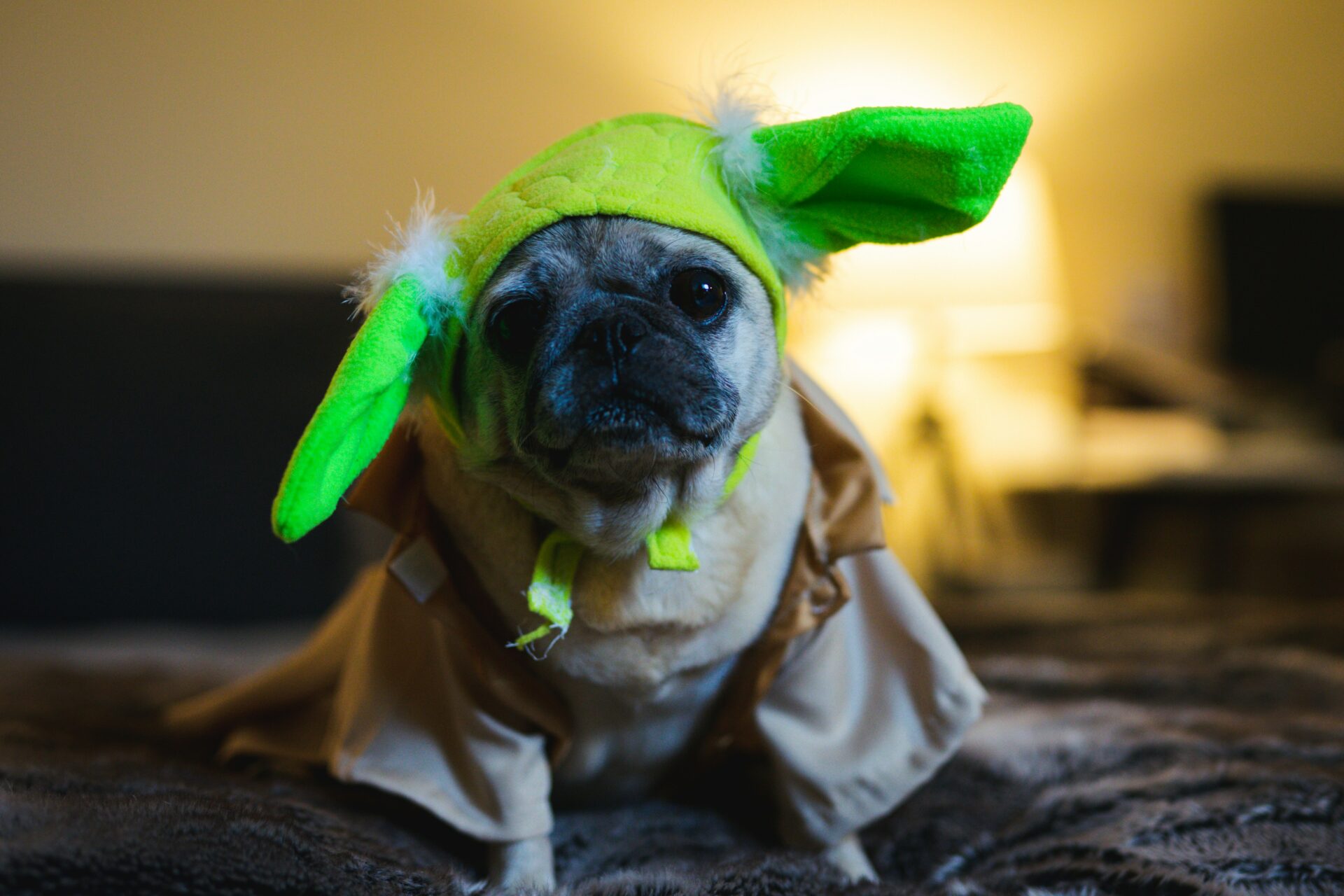
Halloween is one of the most exciting times of year — the candy, costumes, and parties bring out everyone’s playful side. But while we enjoy the spooky fun, our dogs might see things a little differently. Flashing lights, doorbells ringing nonstop, and people dressed as monsters can all be pretty unsettling for pups.
Whether you have a curious puppy or a sensitive senior dog, here’s how to make sure they stay safe, calm, and comfortable this Halloween.
Decorations: Fun for You, Frightening for Fido
Halloween decorations can easily overwhelm dogs. Motion-activated skeletons, flickering lights, and loud sound effects can startle even the most confident pets.
Try introducing new decorations gradually, so your dog can investigate them in a calm setting. Keep motion- or sound-activated props off the floor so they don’t get triggered by curious noses. And avoid placing decorations that resemble human faces or figures at your dog’s eye level — research suggests these shapes can cause anxiety in dogs (Somppi et al., 2016; Owczarczak-Garstecka et al., 2018).
If your pup seems nervous, skip the scary decor altogether or confine it to areas your dog doesn’t frequent.
Costumes: Cute, But Caution Required
We all love a good costume moment — but dogs don’t always share our enthusiasm. People in masks or costumes that obscure their faces or change their shape can confuse or scare them.
If you’re planning to wear a costume or dress up your pet:
- Introduce it slowly with treats, toys, and praise.
- Let your dog watch you put it on so they understand it’s still you.
- Avoid tight, restrictive, or noisy costumes for pets — comfort comes first.
And while those “dog freaks out at costume” videos online might seem funny, a scared dog can panic or even lash out. A slow, gentle introduction prevents stress and keeps everyone safe.
Halloween Parties: A Lot of Energy for Little Ears
Halloween parties are fun for humans — but the crowds, noise, and alcohol can be overwhelming for dogs.
If you’re hosting, consider:
- Giving your dog a quiet space or room with a chew toy, white noise, and a comfy bed.
- Letting them spend the evening with a trusted friend or sitter if your party will be loud or late.
A little planning helps avoid anxious barking, accidents, or escape attempts while guests are coming and going.
Trick-or-Treating: Manage the Madness
Trick-or-treating night is prime excitement overload for pups. Constant doorbells, shouting “Trick or treat!”, and strangers in costumes can send even the calmest dog into a frenzy.
To keep the night smooth:
- Sit outside on the porch to greet trick-or-treaters, or temporarily turn off your doorbell.
- Set up a baby gate or pet barrier inside so your dog can’t dart out when the door opens.
- Consider crate training your dog in advance, so they can rest comfortably in a safe, quiet spot during the festivities.
And of course, remember that candy and chocolate are toxic to dogs — keep all sweets well out of reach.
Final Thoughts
Halloween should be spooky for the right reasons — not because your dog was terrified or injured. Taking a little time to prepare your home and routines will help your pup feel secure and included in the fun.
A calm dog means a happy owner, and a happy owner gets to enjoy the candy.
About Puppies.com
At Puppies.com, we’re dedicated to helping every dog find a loving home and every pet parent feel confident and informed. Whether you’re celebrating the holidays with your pup or searching for your next furry family member, our goal is to make the journey joyful and safe.
👉 Visit Puppies.com to Find Your Perfect Puppy Match® today.