Bringing home a puppy can be exciting and scary
It pays off to be prepared before you bring your new puppy home for the first time
Bringing home an 8-week-old puppy is equal parts magical and overwhelming. If you’re feeling excited and a little terrified, you’re completely normal. One way to help quell the terror is to plan for the day when you bring your puppy home so you feel as prepared as possible. Another is to know that you can’t control everything; mistakes will be made, supplies will be forgotten, obstacles will pop up, and it will all be ok in the end.
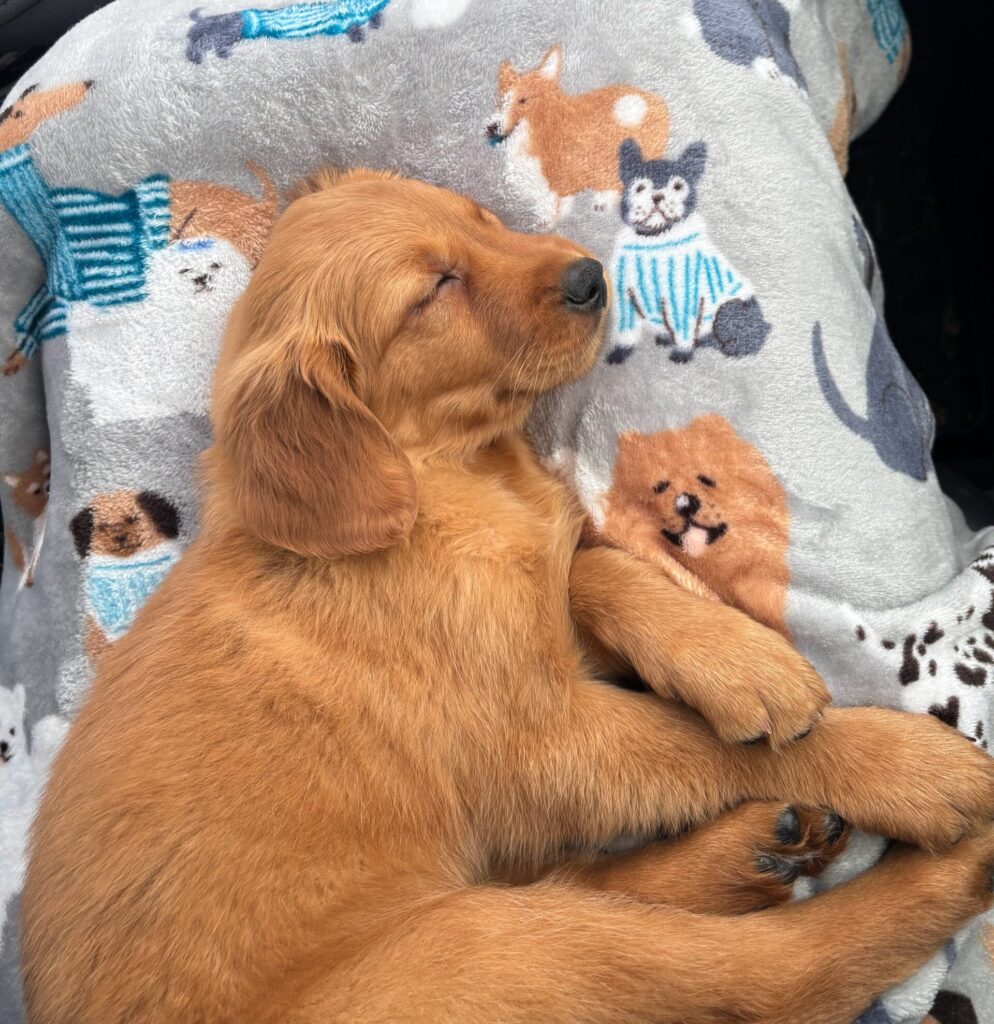
How do I know these things? Because although I’ve taught many puppy classes and helped people prepare for their own puppies… But for the first time in my entire life, I finally brought home my own baby puppy. Her name is Rhubarb (or Ruby, for short). And I can tell you that the experience of bringing her home was magical. And frustrating. And I think I can help you make it slightly more magical than frustrating when you bring home your own wonder pup.
What to expect when picking your puppy up from the breeder
Assuming you’re driving to the breeder, you can expect to have a time slot assigned to you by the breeder. This ensures you have their undivided attention so you can get all the information you need, have time to sign the paperwork, get to visit a little bit with your pup, and learn more from the breeder about the individual puppy you’re taking home with you.
We were warmly greeted by the breeder for our 2-hour time slot, and he brought Rhubarb out to us into an ex-pen with toys so we could start bonding with her and making positive connections. He let us play with her for several minutes and told us all about her, including what her personality was like versus her siblings, why he chose her for us, and how he thought she might thrive in our home.
Plan enough time to meet your new puppy before the ride home
After about 15 minutes of play, the breeder talked us through and had us sign all the official paperwork. Then he also took another 15 minutes to go through some handouts for his recommendations in the next few weeks. For example, he walked us through what chews Rhubarb liked, what food she was eating, her past and future recommended vaccination schedule, her microchip information, and anything else he thought was important. We were given plenty of time to ask questions. In total, the entire interaction probably lasted an hour, so give yourself plenty of time!
Ask plenty of questions and plan enough time
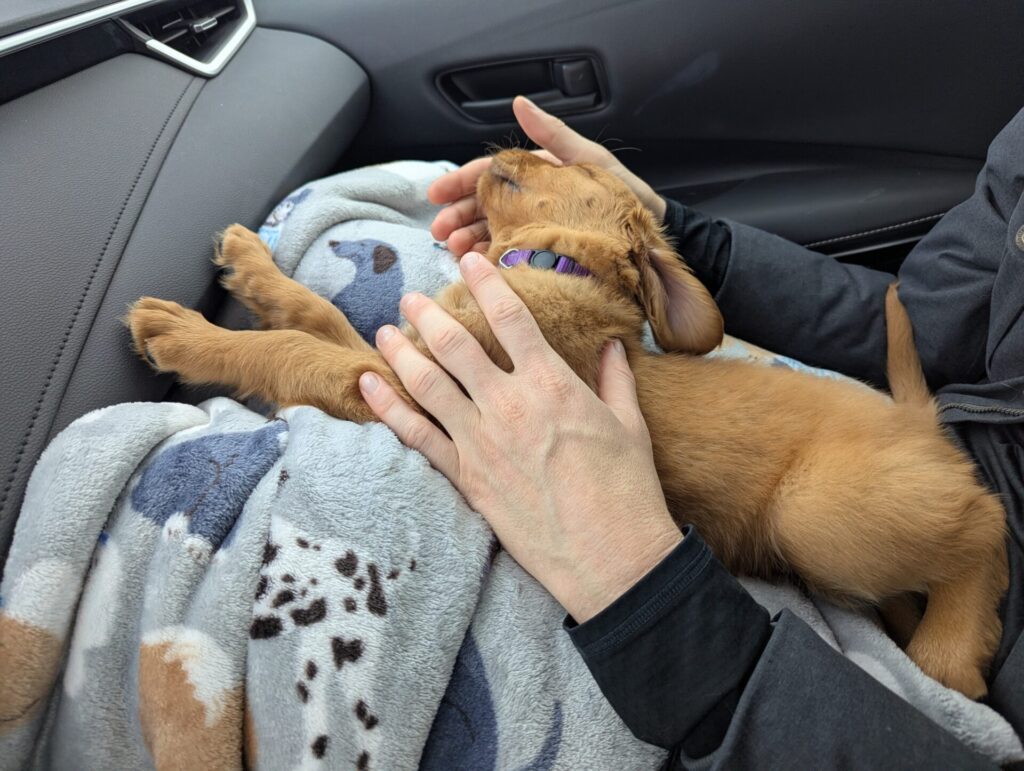
After we finished with the breeder, we took a family picture and then tried to get Rhubarb to potty before getting into the car. (Just know that your puppy may never have been outside before, so they are unlikely to go to the bathroom outside on the first try.) Then we snuggled her up in a blanket, put her in my partner’s lap, and started the long drive home.
Overall, this strategy of taking her from her litter, putting her in an ex-pen, and then transitioning to outside and then to our car was really smart by the breeder. At no time during this hour of introductions and transitions did she ever see her litter or her mom again, which I think was helpful in the process of separation. If she had heard her littermates or mom right before we removed her from her home, I think the process would have been much more traumatic for her. Instead, it was a somewhat gradual transition. So see if you and your breeder can work together to make that transition slow and seamless, too!
And remember that not all breeders structure pickup the same way, but you should expect clear paperwork, health records, and time to ask questions.
What to bring when you pick up your new puppy
Bring all the essentials you’ll need for a safe ride home
- Crate (secured)
- Collar & leash
- Water & bowl
- Kibble (they eat many times per day!)
- Poop bags
And don’t forget to plan ahead and have important puppy essentials waiting for you at home.
Pack some comfort items for your puppy
- Blankets (2)
- Plush toy(s)
- Small treats
Don’t forget to pack some comfort items for you, too!
- Snacks (learn from my mistake; don’t forget your snacks!)
- Water
How to travel with your new pup
Before you even get in the car, make sure that you give yourself way more time than you think to travel with your puppy, because you’ll be stopping a lot for food, water, and pee breaks! Our drive from breeder to home would normally take around 2 hours, and we secretly hoped that we could drive straight home while Rhubarb slept the whole way. Ha – in our dreams!
Because their little bladders are so small, 8-week puppies pee almost every hour, and they eat around four times per day, meaning that we had to make a lot of pit stops on our drive. Lots of those stops were for potty breaks; you should stop as soon as possible anytime your puppy wakes up on the drive, but especially if they start squirming around or panting.
When you do let them out to potty, remember that they are mostly unvaccinated, and therefore at risk of transmittable diseases. Try to avoid high-traffic dog areas and carry your pup around whenever possible.
The second thing to consider is where your puppy will be located in the car. While the safest option is a secured crate, some families choose lap travel for emotional comfort, especially at a time when the pup may be stressed after removal from the home. If you do, understand the risks and make that decision intentionally, as even minor accidents can seriously injure an unrestrained puppy.
What to do upon immediately getting home
What to do in the first 2 days after bringing home your new puppy
In the first 48 hour of bringing your pup home, your goals are to:
- Keep them safe.
- Prevent accidents.
- Let them rest.
- Keep the world small and calm.
First things first: take your puppy outside to potty. It will likely take them several minutes to do so, as they may have never been outside before. Plus, they will get super distracted by everything in their new environment. If they don’t potty, take them inside and put them down for a nap in a crate, if possible.
Once they wake back up, back outside again for pottying. Preventing accidents early on will set you and your new puppy up for success in potty training!
We’ll talk a lot more about potty training in a different blog, but your goal in these first few days is to have as few accidents inside as possible. This will strengthen their association of pottying outside, and it will also avoid you getting frustrated. And I can promise you, you’ll have plenty of frustration over the next few weeks, so avoiding frustration now is key to winning the marathon!
We’ve covered how to puppy-proof your home in previous blog articles, and it’s recommended to do this “before” you arrive home with your new puppy, as you’ll want to ensure a safe environment.
To help your puppy adjust, you’ll want to make your home as warm and comforting as possible. In other words, in between potty breaks, let them sleep a lot, cuddle them when you can, and get some early play in. Make early use of the crate during naps while you are immediately nearby so they can start getting used to being crated; this is much easier if done while they are brand new puppies than if they are older!
Also, because puppies between 3-12 weeks are in their early socialization window, keep their experiences safe and pleasant during these early days and weeks. Experiences during this window shape long-term emotional responses. Keep them protected and calm.

Lastly, make sure you have plenty of support and supplies for yourself. This experience is going to be both joyful and hard, and you will grow so much from it. It’s common to feel overwhelmed in the first few weeks — that doesn’t mean you made the wrong choice. At some point, you will do things you never imagined — like grabbing a pooping puppy mid-business call. Adaptability will become one of your new core skills, but it’s hard to adapt if you’re stressed out!
Other puppy resources from Puppies.com
Unlocking Freedom: Safely Leaving Your Potty-Trained Puppy Home AloneMastering Puppy Independence: Can I Leave My Puppy Home Alone?
Puppy Adoption 101: Your Complete Guide to Finding the Perfect Puppy on Puppies.com
Puppies.com is your trusted puppy platform for Paws-itive Puppy Love! Since 2003, Puppies.com has helped millions of puppies find their fur-ever homes from sellers nationwide. Finding your perfect pup is free and easy–and signing up only takes a few minutes. Add a little wiggle to your life!®