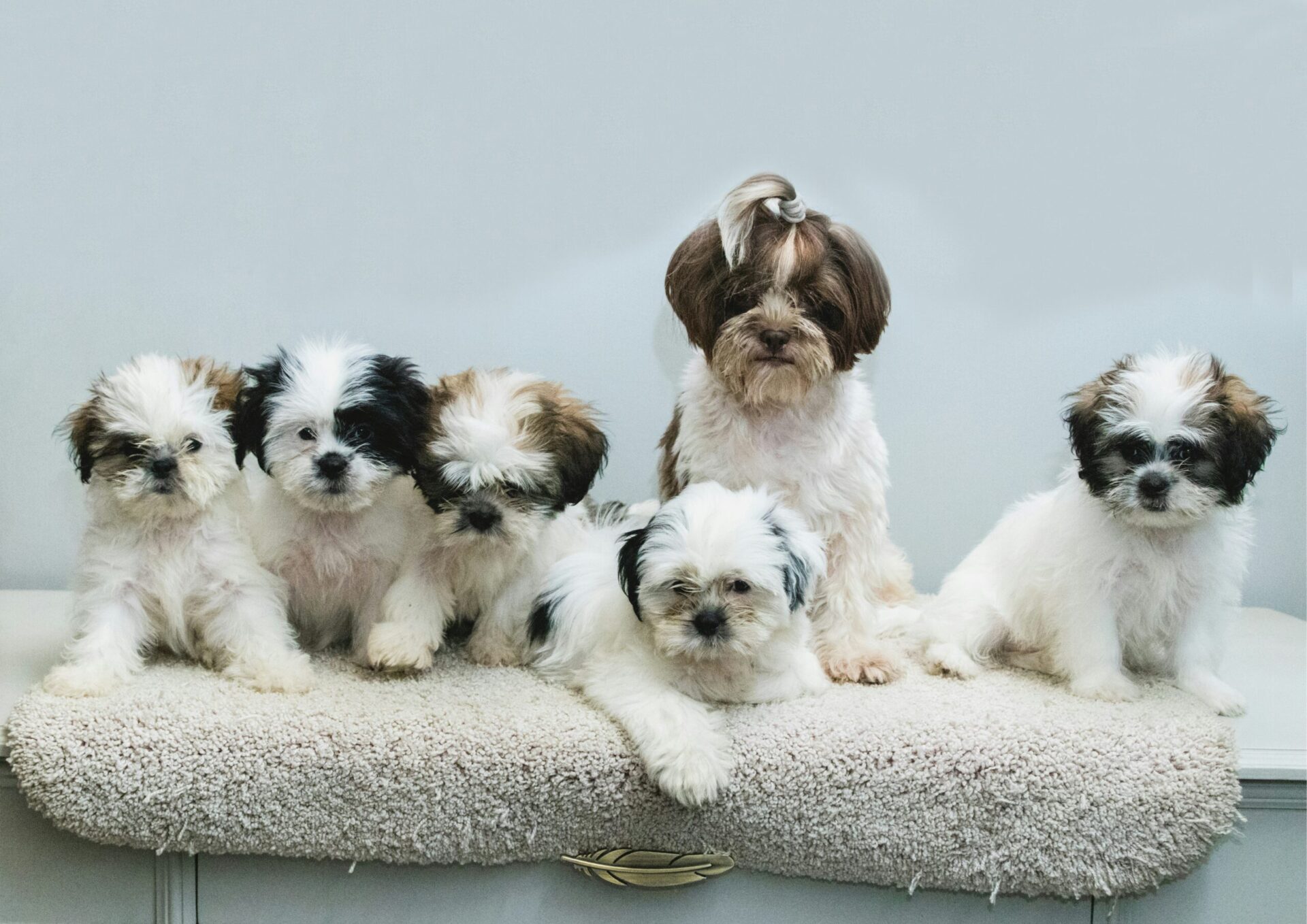
Socialization and Puppy Development: Timing is Important!
Why Puppy Socialization Matters
Puppy socialization plays a vital role in raising behaviorally well-adjusted adult dogs. Puppies who receive proper early socialization are more likely to grow into confident, friendly, and emotionally stable adult dog companions. According to research (Puurunen et al., 2020), well-socialized puppies are less likely to develop social fearfulness or discomfort around people, animals, or unfamiliar situations.
Socialization may include slowly and carefully introducing the puppy to all sorts of new people, objects, situations, other dogs, and anything else that may be relevant in their adult lives.
This all sounds straight forward and even fun, but the socialization process must take into account the developmental periods of puppies and needs to include help from breeders before they even go home.
What Is Puppy Socialization?
Socialization involves gradually and safely introducing a puppy to:
- New people
- Other animals
- Different environments
- Unusual objects and sounds
This process must begin during the critical puppy developmental periods—many of which occur while the puppy is still with the breeder.
Puppy Developmental Periods
0–3 Weeks: Early Sensory Awareness
Puppies begin to use their eyes and ears around 3 weeks of age, although they can certainly experience other stimuli in their environment immediately after birth, such as touch, temperature, smell, etc. (Scott & Fuller, 1965; Scott & Marston, 1950).
Therefore, puppy socialization should begin by 3 weeks of age, if not sooner. Around 3 weeks, puppies begin to play and play fight with each other, including pawing, mouthing, and growling. Because puppies are generally still with their breeders at this time, it is critical that you find a good breeder who carefully and thoughtfully interacts with the puppies on a daily basis and offers safe, rich socialization opportunities, even to puppies as young as 3 weeks old!
3–8 Weeks: The Critical Socialization Window
This is an extremely rich period of puppy behavioral development. Around 5 weeks, puppies start to develop fear or avoidance behaviors but are still very interested in engaging with novel people and stimuli and even like to follow people around.
Because of this interesting mix of both fear/avoidance and engagement with people, foundational studies suggest 5-8 weeks of age is an ideal time for puppy socialization (Freedman et al., 1961), although there appear to be major differences in the timing of socialization needs between breeds (Morrow et al., 2015; Scott & Fuller, 1965). For example, German Shepherds may have a much earlier and smaller socialization window than other breeds, such as the Cavalier King Charles Spaniel.
It makes sense that breeds which have been selected to guard things might have a smaller socialization window, as those breeds are meant to be wary of unfamiliar people and things. In other words, if you’re taking home a puppy with guardian breed genetics, it may be especially important to work with a breeder who is not only exceptionally thoughtful about their breeding strategies for socially-acceptable temperaments but who also has good, early socialization practices in place for their puppies
During this period, puppies also start to solve problems around 6 weeks, can get into more serious scuffles with their littermates (complete with growling and more intense mouthing/biting), engage in whining if frustrated, and may begin mouthing on humans (Waite et al., 2021).
These are all behaviors that should be carefully monitored and addressed appropriately by their breeder in order to avoid escalations which must then be addressed later when you bring the puppy home.
8-16 weeks Transition to the New Home
Around 8-10 weeks is typically when puppies go to their new homes. Although these ages are still considered part of the puppy’s socialization period, puppies may be less open to experiencing and engaging with novel things by this age (Freedman et al., 1961; Scott & Fuller, 1965), which can make socialization slower or more challenging.
Therefore, it’s important for puppies to continue being socialized to things which will are relevant in their new homes, but hopefully they are going home already with a good social base from the work their breeder did. New homes should focus on getting the puppy used to experiences which are unique to their home. For example, if the breeder has done a good job socializing the puppy to small crowds of people, you can likely start taking the puppy for very brief, well-monitored tailored socialization training periods to your favorite coffee shop.
Puppies at this stage need plenty of breaks and naps throughout the day, so treating them like toddlers who are unable to regulate themselves is best. This means putting them down for regular naps throughout the day and keeping activities brief. When puppies in this age get overtired, they often engage in “zoomies” and other indicators of over-arousal, such as jumping, mouthing, and humping.
What new owners should do:
- Continue socializing with short, positive experiences (e.g., brief visits to pet-friendly coffee shops)
- Enforce nap schedules, treating puppies like toddlers
- Avoid overstimulation to reduce unwanted behaviors
Goal: Reinforce the breeder’s socialization efforts by introducing home-specific routines, people, and sounds.
12 weeks – 12 months: Juvenile Behavioral Period
During the juvenile period, the puppy continues to develop an adult body, although they retain many puppy-like behaviors, such as mouthing on people (Waite et al., 2021). Around this time is typically when stranger-directed aggression is most likely to appear (Serpell & Duffy, 2016), so families should keep a watchful eye out for new behaviors of hesitation or fear around strangers and address them as quickly as possible.
Although behavioral interventions can have an impact on behavior during this period, the behavior change will likely be much slower than it would have been during the socialization period, and there are some behaviors which could be exceedingly difficult to change at this stage.
Owner focus:
- Begin consistent training and exposure to reduce the risks of persistent fear or reactivity.
- Watch out for red flags.
- Monitor for fear-based behaviors or aggression.
Final Thoughts on Puppy Socialization and Development
A lot of puppy socialization can be performed once the puppy goes to their permanent home around 8 weeks, but there is a ton of work that must be done by the breeder long before then. Therefore, being very selective about your breeder is critical.
Ask a lot of questions to potential breeders about their socialization practices, the timing of those practices, and the support they offer new homes should concerning behaviors arise. It should be noted that really good breeders put a lot of effort into socialization for their puppies; this means that puppies receiving good socialization practices may have premium prices.
Nevertheless, even excellent socialization cannot overcome poor behavioral genetics, so make sure you’re buying from a breeder who is exceptionally thoughtful about breeding for good social behaviors.
Puppy behavioral development is a partnership between breeders and new owners—make the most of each stage for a lifetime of good behavior.
Puppies.com is your trusted puppy platform for Paws-itive Puppy Love! Since 2003, Puppies.com has helped millions of puppies find their fur-ever homes from sellers nationwide. Finding your perfect pup is free and easy–and signing up only takes a few minutes.
Add a little wiggle to your life!®
References
Freedman, D. G., King, J. A., & Elliot, O. (1961). Critical period in the social development of dogs. Science (New York, N.Y.), 133(3457), 1016–1017. https://doi.org/10.1126/science.133.3457.1016
Morrow, M., Ottobre, J., Ottobre, A., Neville, P., St-Pierre, N., Dreschel, N., & Pate, J. L. (2015). Breed-dependent differences in the onset of fear-related avoidance behavior in puppies. Journal of Veterinary Behavior: Clinical Applications and Research, 10(4), 286–294. https://doi.org/10.1016/j.jveb.2015.03.002
Puurunen, J., Hakanen, E., Salonen, M. K., Mikkola, S., Sulkama, S., Araujo, C., & Lohi, H. (2020). Inadequate socialisation, inactivity, and urban living environment are associated with social fearfulness in pet dogs. Scientific Reports, 10(1), 3527. https://doi.org/10.1038/s41598-020-60546-w
Scott, J. P., & Fuller, J. L. (1965). Genetics and the social behaviour of the dog (1st ed.). The University of Chicago Press.
Scott, J. P., & Marston, M.-’Vesta. (1950). Critical Periods Affecting the Development of Normal and Mal-Adjustive Social Behavior of Puppies. The Pedagogical Seminary and Journal of Genetic Psychology, 77(1), 25–60. https://doi.org/10.1080/08856559.1950.10533536
Serpell, J. A., & Duffy, D. L. (2016). Aspects of Juvenile and Adolescent Environment Predict Aggression and Fear in 12-Month-Old Guide Dogs. Frontiers in Veterinary Science, 3. https://doi.org/10.3389/fvets.2016.00049
Waite, M. R., Harman, M. J., & Kodak, T. (2021). Frequency and animal demographics of mouthing behavior in companion dogs in the United States. Learning and Motivation, 74, 101726. https://doi.org/10.1016/j.lmot.2021.101726